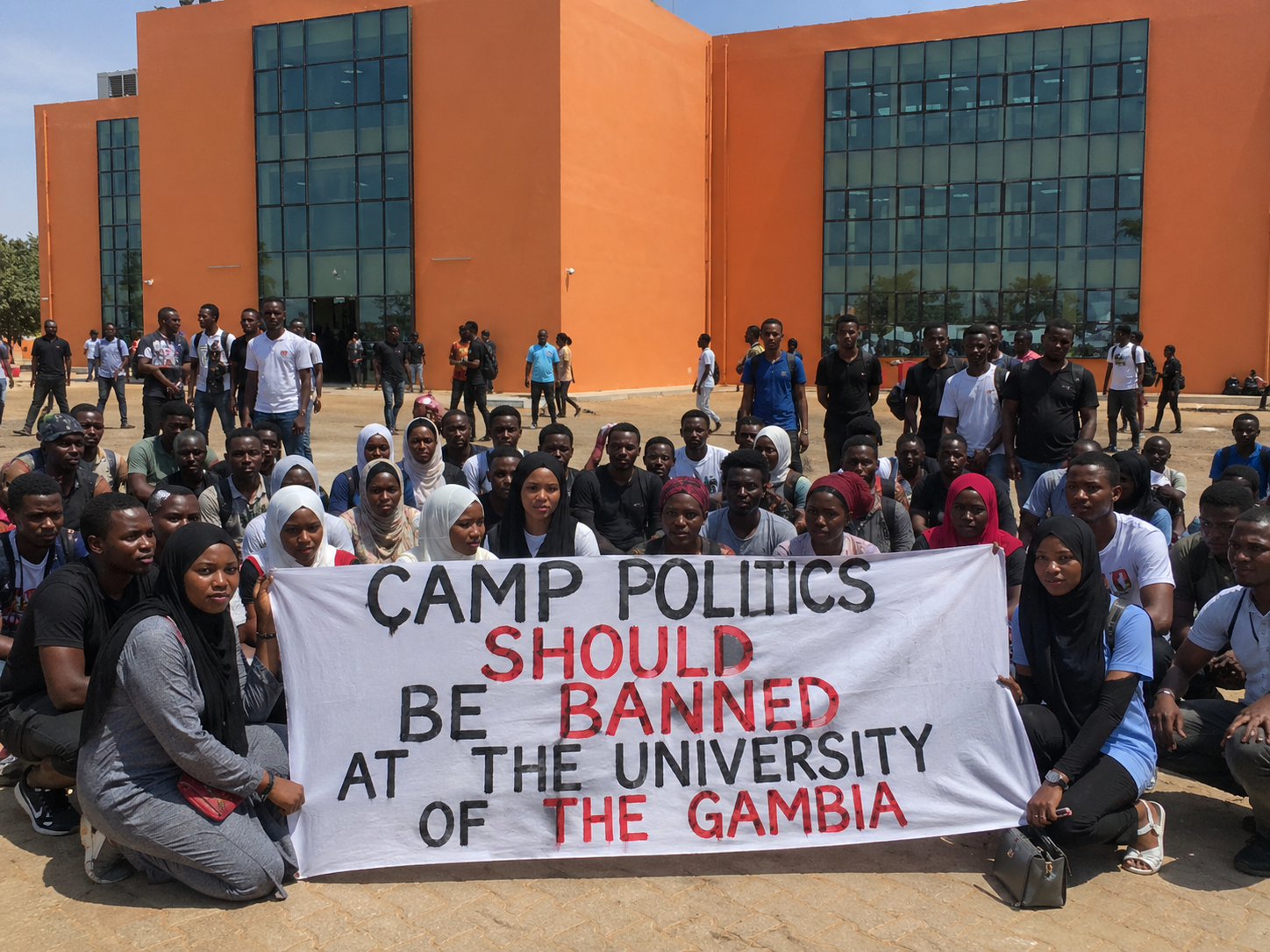
Camp politics at the University of The Gambia has become a growing concern, one that threatens not only student unity but also the integrity of leadership development within the institution. While political engagement among students is essential, the current form it has taken is deeply problematic and counterproductive.
Division Over Dialogue
At its core, camp politics fosters division. Instead of encouraging healthy debate and the exchange of ideas, it creates rigid factions that prioritize loyalty over merit. Students often go to great lengths to discredit opponents, engaging in character attacks and reputational damage rather than focusing on policies or competence. This toxic environment distorts the true purpose of politics and leaves many students with a negative, repetitive perception of what leadership should look like.
When camp affiliation becomes the primary qualification for leadership, capable students are pushed aside. The university loses potential visionaries because they refuse to pledge blind allegiance to any faction.
A Dangerous Blueprint for National Leadership
Universities are meant to be centers of learning and personal development, spaces where future leaders are shaped. The students of the University of The Gambia are no exception; they represent the next generation of national leaders. However, when divisive and hostile political practices dominate campus life, it raises concerns about what kind of leadership will emerge at the national level. If such behaviors are normalized in the university, they risk being carried into the broader political landscape of the country.
“If students are trained in division and hostility, society risks inheriting leaders who replicate these patterns on a larger scale.”
Meritocracy Undermined
Another troubling aspect of camp politics is its impact on leadership selection. Instead of choosing capable, visionary individuals, students are often pressured to support candidates based on camp affiliation. This undermines meritocracy and makes it difficult for competent leaders to emerge. Additionally, some students engage in manipulative tactics, such as recruiting new students into camps under the guise of support and guidance, only to secure loyalty and political advantage later. This results in blind allegiance rather than informed decision-making.
Chaos in Student Gatherings
The consequences are evident during student conventions and congresses. Rather than serving as platforms for meaningful dialogue and idea-sharing, these gatherings often devolve into chaos. Booing, insults, and even physical altercations have become common, reflecting a shift from intellectual engagement to hostile confrontation. What should be a democratic process instead resembles a battleground between opposing camps.
When student congresses turn into shouting matches, the entire student body loses. Important motions are dismissed, leaders are elected for the wrong reasons, and the university's democratic culture suffers permanent damage.
The Gambia’s Democratic Future at Stake
For a country like The Gambia, which holds great potential for growth and democratic development, this trend is particularly concerning. Universities should set the standard for constructive political engagement, not reinforce the worst aspects of it. If students are trained in division and hostility, society risks inheriting leaders who replicate these patterns on a larger scale.
A Clear Solution: Dismantle Camp Politics
The solution lies in dismantling camp politics within the university. Students should be encouraged to run and vote independently, based on competence, integrity, and vision rather than allegiance to a group. By doing so, the university can restore a culture of respect, critical thinking, and genuine leadership.
Banning camp politics is not about eliminating student politics — it is about reforming it. It is about ensuring that the political environment within the University of The Gambia reflects the values of unity, fairness, and progress. Only then can the institution truly fulfill its role as a breeding ground for responsible and capable leaders.
“Banning camp politics is not about eliminating student politics — it is about reforming it.”
Moving Forward Together
Students must demand a new kind of politics — one where ideas matter more than identity, and where leadership is earned through service, not through factional loyalty. University administrators, student guilds, and civil society organizations should work together to draft and enforce a code of conduct that prohibits camp-based mobilization. Awareness campaigns can help students understand the long-term harm of factionalism.
The University of The Gambia has a choice: continue down a path of division, or become a model of democratic excellence. The answer should be clear. It is time to ban camp politics and build a campus culture rooted in respect, reason, and real leadership.