
Let me tell you about a person I know very well. We have been close for years. He is talented, reasonably intelligent, full of good ideas, and has, on at least forty separate occasions, decided that the best time to start an assignment is eleven-thirty at night when it is due at midnight. He has watched an entire documentary about the life cycle of jellyfish instead of writing a two-paragraph introduction. He has reorganised his desktop, deep-cleaned his room, and once — and I am not proud of this — spent forty-five minutes reading about the history of the Oxford comma instead of opening the document that was supposed to contain his essay.
That person is me. And if you are reading this with a slowly dawning, uncomfortable sense of recognition, then hello. Welcome. Pull up a chair. Or actually, knowing you, you probably opened this article as a way of avoiding something you were supposed to be doing right now. That is fine. I respect it. Sit down. We are going to talk.
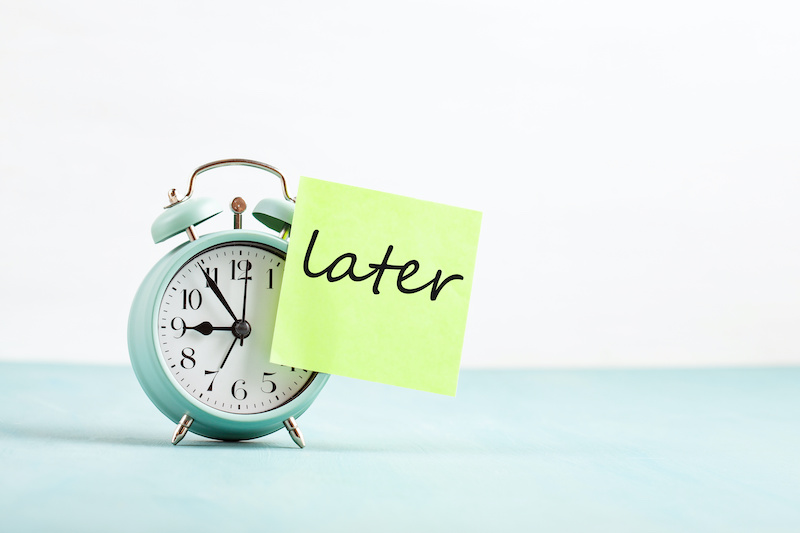
The Lie We Have All Been Told
Society has a very clean, very simple story about procrastination. It goes like this: you procrastinate because you are lazy. You lack discipline. You do not want it badly enough. If you really cared, you would just do the thing. Successful people do not procrastinate. Successful people wake up at five in the morning, drink cold water with lemon, and attack their to-do lists before the rest of the world has even found its slippers.
That is a lovely story. It is also, I would argue, almost entirely wrong.
Here is what nobody tells you at school, or at home, or in those aggressively motivational Instagram posts with sunsets in the background: procrastination, for most people, is not a time management problem. It is an emotional regulation problem. Those are two very different things, and treating them as the same is like handing someone a map of Dakar when they are trying to navigate London. Technically it is still a map. It is not going to help you.
Researchers have found that procrastinators are not people who are bad at managing time. They are people who are bad at managing feelings – specifically, the feelings that a particular task makes them experience: dread, boredom, self-doubt, anxiety. The brain moves away from discomfort and toward pleasure. That's not laziness. That's neuroscience.
Three Real Reasons You Cannot Start (That Have Nothing to Do With Laziness)
1. Fear of Failure, Dressed Up as Delay
Here is a thing that took me an embarrassingly long time to understand about myself: sometimes I did not start assignments because I was afraid of what would happen if I finished them and they were not good enough.
Think about it. If you never start, you can never fail. You can tell yourself — and anyone else who asks — that you just ran out of time. "I would have done better if I had more time." That is a very comfortable story to live inside. It protects you from the far more terrifying verdict: that you tried your best and it still was not enough.
This is what psychologists call fear of failure, and it is extraordinarily common, especially among people who have spent their whole lives being told they are smart. Being smart, it turns out, is both a gift and a trap. When your whole identity is built around being the intelligent one, the capable one, the one who gets things right — suddenly every task becomes a referendum on whether that identity is actually true. The stakes feel enormous. And so you delay, and delay, and delay, until the deadline collapses the whole system and you just have to do something, because something is better than nothing.
The fix here is not a motivational speech. It is a genuine shift in what you are aiming for. Tell yourself: I am not trying to write a perfect first draft. I am trying to write any first draft. Aim for "good enough to exist" rather than "good enough to be proud of." You can be proud of it later. Right now you just need words on a page. Five of them. Ten. It does not matter. The document needs to not be blank.
2. The Overwhelm Spiral
This one is sneaky, because it disguises itself as sensibility. You look at the task — write a 3,000-word research essay on postcolonial economic theory, let's say — and your brain does a quick calculation. It sees the enormity of it. It sees all the reading you have not done, all the arguments you have not formed, all the citations you will need to track down, and it produces a single, clean, reasonable-sounding thought: this is too much.
And then it shuts down. Not dramatically. Quietly. It just... stops being willing to engage. It goes somewhere else. It finds something more manageable — a text to reply to, a snack, a quick Wikipedia rabbit hole that starts at postcolonial theory and somehow ends at the geopolitical history of the Spice Islands.
The solution is almost insultingly simple, but it works: break the task into steps that are so small they feel almost offensive. Not "write the essay." Instead: open the document. Write the title. Write one sentence about what you think the essay is going to say. That is it. Stop there if you need to. You have done something, and something is a beginning, and beginnings have momentum.
3. Executive Dysfunction — And Why Your Brain Might Just Be Wired Differently
This is the one that does not get talked about nearly enough, especially in African educational contexts where there is still a significant stigma around neurodevelopmental differences.
Executive dysfunction is the term for when your brain struggles with the cognitive tasks required to initiate, plan, organise, and complete things. It is not a character flaw. It is not a sign that you are weak or that you were raised incorrectly. It is a neurological reality for a significant portion of the population — particularly those with ADHD, anxiety disorders, depression, or a combination of the above.
And here is the uncomfortable truth about ADHD specifically: it is massively underdiagnosed, particularly in people who are also high achievers, and disproportionately underdiagnosed in communities of colour. Partly because the stereotype of ADHD is a white boy bouncing off the walls in a classroom. Partly because many people with ADHD — especially those with the inattentive type, which is less visibly hyperactive — develop what are called compensatory mechanisms: ways of managing the dysfunction well enough to appear fine on the outside, while quietly drowning on the inside.
"If you have always been someone who cannot seem to start tasks until pressure forces you to, who forgets things the moment they leave your field of vision, who hyperfocuses on interesting things for hours and cannot touch boring things at all — you are not necessarily lazy. You might be working with a brain that is structurally different."
Knowing this is not an excuse. It is information. And information gives you options.
Practical Things That Actually Work
Let us be clear about one thing upfront: the internet is full of productivity advice, and most of it is designed for people who fundamentally just need a small nudge. If you are someone dealing with anxiety, burnout, or executive dysfunction, "just make a to-do list" is advice that will make you want to throw your laptop into the sea. So these are things that work even when your brain is being genuinely difficult:
- The five-minute rule. Tell yourself you are going to work on the task for exactly five minutes. Not to finish it. Not to do it well. Just five minutes. Set a timer. When the timer goes off, you are allowed to stop. The trick is that you almost never stop. Five minutes is enough to break the activation barrier. Once you are inside the task, momentum takes over. But even if you do stop after five minutes — you still did five minutes more than you did before. That is a win. Take it.
- Structured procrastination. Give yourself a set amount of time — say, fifteen minutes — where you are explicitly allowed to scroll, watch something, or do nothing. Put it in your calendar. Call it "procrastination time." The moment it is official and time-boxed, it loses its power. You will be surprised how quickly you get bored of guilt-free scrolling when the guilt is gone. The guilt was half the appeal.
- Body doubling. Work in the presence of another person — a friend, a classmate, anyone — even if you are working on completely different things and not talking at all. Something about human presence activates accountability circuits in the brain. Libraries work. Coffee shops work. Study groups where nobody is actually studying but everyone is at least sitting near a laptop work. Use what you have.
- The timer as a commitment device. Set a Pomodoro timer — twenty-five minutes of work, five minutes of break. There is a reason this technique has survived decades of productivity trends: it gives your brain a visible finish line. You are not working until it is done. You are working until the timer goes off. That is a very different psychological proposition.
- Talk to someone. And I mean a professional someone, not just a friend who will sympathise and then also get distracted with you. University counselling services exist, they are free, and they are confidential. If procrastination has moved beyond "occasional annoyance" into "actively destroying my grades and my peace of mind," that is a sign worth taking seriously. A counsellor can help you figure out whether what you are dealing with is anxiety, burnout, something else, or all three at once. There is no version of that conversation where you come out worse off.
You are probably not lazy. You are probably not broken. You are probably a person carrying a normal human brain that was not designed for the modern landscape of infinite distraction, constant comparison, and the specific peculiar pressure of being a student in 2026. Open the document. Write your name at the top. Find the textbook you need. Make the one phone call. Send the one email. That is enough for today.
The Thing Nobody Says Out Loud
We spend so much time — so much collective energy — hating ourselves for procrastinating. Lying in bed at two in the morning, assignment half-done, calling ourselves stupid, lazy, worthless, not good enough. Making elaborate promises to our future selves about how things will be different next time. (They will not be different next time. Not without actually changing something.)
What we almost never do is stop and ask: why is this actually happening? Not in a blame-removing, nothing-is-my-fault way. In a genuinely curious, genuinely kind way. What is the feeling that this task is producing that makes me not want to be near it? Am I afraid? Overwhelmed? Exhausted? Am I running on three hours of sleep and empty and expecting myself to perform at full capacity anyway?
"Most procrastination is not laziness. It is your nervous system telling you something. Maybe it is telling you that the task feels threatening. Maybe it is telling you that you are depleted and need rest that you have not allowed yourself. Listen to it. Not to give in to it, but to understand it. Because you cannot fix a problem you refuse to look at."
So. One Tiny Step.
You are probably not lazy. You are probably not broken. You are probably a person carrying a normal human brain that was not designed for the modern landscape of infinite distraction, constant comparison, and the specific peculiar pressure of being a student in 2026 — with all its uncertainty and noise and competing demands on your attention.
You are also probably someone who, if they are honest with themselves, already knows what the first step is. Not the whole task. Just the first step. The one that is so small it almost feels pointless. Open the document. Write your name at the top. Find the textbook you need. Make the one phone call. Send the one email.
That is enough for today.
Be kind to yourself. And then start.